Showing posts with label Do Justice. Show all posts

Saturday, January 8, 2022

Jesus Would Wear a Mask - CRCNA Network


 "Jesus loved God and loved his neighbors. If Caesar said not to wear a mask but experts said it would protect the vulnerable anyway, Jesus would still have worn a mask."

The full article is available here

Thursday, June 18, 2020

We Must Not Go Back to Normal - The Network, Christian Reformed Church in North America


At some point we all would like to get back to some kind of normal. But we should not go back to a dysfunctional normal (of white privilege and systemic racism).

"Normal" has not been good for everyone. It is time for a normal that restores an identity in Christ in us and all of our neighbors, especially our Black neighbors.

My normal as a white person does not require me to think about who might be watching me or how my actions might look to someone else merely due to the color of my skin. I can pass by neighbors, most of whom are strangers, without people perceiving me as a threat or wonder what I’m doing.

Black people in the U.S. live a different reality on a daily basis than I do as a white person.  Their reality is one that they can't step away from because they're perpetually being judged by their skin color.

The reality of systemic racism requires our Black brothers and sisters to be wary, on guard, careful about their surroundings and the people near them 24/7 - whether going for a run, a drive in the car, shopping, or bird-watching.

That’s their normal, and we should not go back to that normal.

Black leaders are speaking and creating a new path forward. It is time for a normal that listens and seeks to understand.

If we wish to be faithful to God in doing to others as we would have them do to us, we must do something. The racism baked into the systems of our society will not change unless we continually take action.

The full article is available here

Monday, June 15, 2020

I Have Prejudices and I'm Part Of Systemic Racism - Rev Jennifer Holmes Curran in The Banner

Racism degrades bearers of God’s image, even while it distorts our own humanity. It is abhorrent in God’s eyes. And I am complicit in systemic racism as a white person to the extent that I benefit from it and to the extent to that I fail to fight against it.

As a white person, racism has been trained into me through a lifetime of stereotypes in movies, TV shows, and the news. It is part of my felt experience, living “across the tracks” from the more dangerous and diverse neighborhoods.

There are lots of different definitions of racism, but any worthwhile definition has to include prejudice against someone of another skin color or ethnicity.

While I have prejudice, my racism is much bigger than it. That's why it is so important to note that prejudice is much more destructive when it is perpetrated by a dominant culture.

I didn’t make all of these structurally racist problems happen, but in the end, just by virtue of being identified as white, I stand on one side of this conversation. Because I am white, I can have the luxury of not thinking about these problem and the luxury of not working to fix them. I am complicit to the extent that I benefit from them and to the extent to which I fail to fight them.

My racism degrades bearers of God’s image, even while it distorts my own humanity. It is abhorrent in God’s eyes. And I am guilty of it.

Confession returns me to the humility I need to be able to listen to my brothers and sisters of color. Knowing I am a part of the problem makes me want to press in and keep learning. Knowing the bottomless grace and love of God gives me a sense of steadiness when I feel defensive. It allows me to slow my knee-jerk reactions so I that can try to understand.

The full article is available here

Monday, April 27, 2020

Our Public Health Responsibility as Christians - The Banner

This is an opportunity for Christians to live out the 2nd commandment Jesus gave to love our neighbors as ourselves. 

Covid-19 has put public health into practical terms for us today.

Similar to when public health advocates for vaccines, the current message of practicing physical distancing is about asking people to do something that will help not only themselves but others as well. Especially those who are most vulnerable.

People everywhere are being asked to think of their communities above themselves and stay home and limit contact with others.

It’s uncomfortable and not always pleasant.

It means giving up what we want in service to others. And it is an opportunity for Christians to live out the 2nd commandment Jesus gave to love our neighbors as ourselves.

My hope is that after Covid-19 is over, we will not forget this opportunity we had to live out our collective responsibility to protect and look after others.

Hopefully we will carry on being advocates for equity, we will think of others' needs above our own, and we will continue caring for the most vulnerable among us.

The full article is available here

Tuesday, March 17, 2020

The Church Being Community During COVID-19 - Jodi Koeman at CRC Network

We need to plan how we bring shalom to our communities and neighborhoods. 

Many churches are figuring out how to gather remotely, and while this is important, maybe this is an opportunity to BE the church in a new way.

We’ve been forced outside the church walls. How will we respond? What role does the church have in this crisis?

While we plan to maintain a sense of community among our members, maybe we also need to plan how we bring shalom to our communities and neighborhoods.

These principles, articulated by Cormac Russell of the Asset Based Community Development Institute at Northwestern University, are helpful in guiding us.

  • 1. Citizen-led - We need to follow the guidelines of CDC and other health care providers.
  • 2. Relationship-oriented - While taking social distancing measures seriously, how do we seek out people in our community that need our support?
  • 3. Asset based - What strengths and gifts do you or your church have to bring to this situation and to your community? What strengths are right in your neighborhood?
  • 4.Place-based - Churches are key places for community. We should look out for one another, but now is a prime opportunity to be with those in our local neighborhoods as well.
  • 5.Inclusion-focused - Ask your community what is helpful. Ask community members what they can offer. Don’t assume you know what the most vulnerable need.

The full article is available here

Friday, September 13, 2019

Benediction: God, Make Us Human Together (based on Psalm 98:9)

based on "Words of Sending" by More Light Presbyterians, New Orleans

In our everyday lives, may we look for God’s divine spark which is present in everyone and everything. May that awareness of the inherent dignity and worth of ALL cause compassion to move within us and grace to flow outward from us.

May we join in loving solidarity with all of those who are excluded, dehumanized, hurting, struggling, or feeling lost. May we be willing to be honest about our need for help when we are hurting, struggling, and feeling lost.

May God's love help to make us human together, by which we will be a true reflection of God's infinite beauty, goodness, and love.

Wednesday, July 17, 2019

God's Love Isn't Limited By Legal Status - Do Justice

Every human being is made in God's image. As a result, we are commanded to treat all human life with respect and kindness.

It is clear that God loves immigrants, who are among the most vulnerable members of society. An ancestor of Jesus, Ruth was an immigrant and benefited from God's concrete love through the laws that God gave to the Israelite tribes that made provision for the poor and the immigrant.

God's love for the immigrant is also revealed in the life of Jesus. In Matthew 2, Joseph, Mary, and Jesus took refuge in Egypt when King Herod ordered the mass execution of Jewish boys of a certain age. Their lives were at stake, so Egypt became their temporary home.

God's love extends beyond legal status or country of origin. God does not give us the job of judging whether anyone is worthy of  love. Every human being in God's image. As a result, we are commanded to treat all human life with respect and kindness.

Can we overcome our obstacles? Can we overcome our fears? Can we love like Jesus loved? God's love requires that we no longer hold the stranger at arms-length because of Jesus’ radical identification with the least of these.

The full article is available here

Saturday, July 13, 2019

A Guide to Your Rights When Interacting with Law Enforcement - Catholic Immigration Network

Undocumented immigrants and their families have rights. These "Know Your Rights" resources are available in multiple languages and include pictures and explanations of the different warrants that officials may use in immigration enforcement actions.

The full guide is available here

Monday, June 10, 2019

Let's Stop Accepting These 5 Immigration Lies - Christian Reformed Church Office of Social Justice

Those suffering at the border are our brothers and sisters.

One impulse to cope with news of how our government is mistreating migrants this is to find a way to get distance from it. Maybe it’s to rationalize it -- there are just so many migrants, it’s impossible to handle them all humanely. Maybe it’s to moralize it -- these people should stop breaking the law. Maybe it’s to doubt it -- there’s got to be some way this is “fake news,” or somehow overblown by the media.

We should be people committed to the truth. Truth brings freedom.

We are called to keep learning (or un-learning), and to keep our eyes open, to bear witness, and to advocate for justice on behalf of those suffering at the border.  They are our brothers and sisters.

In courage, let’s stop accepting these lies:

(1) “More immigrants are coming today than what the country can handle.” 
(2) “Mexican and Central American leaders aren’t taking responsibility for this crisis, and foreign policy threats can force them to.” 
(3) “Tougher border policies will take away people’s desire to come to the U.S.” 
(4) “Refugees in other parts of the world shouldn’t have to wait longer because of people jumping the line at the border.” 
(5) “There’s no choice but to incarcerate people who are crossing the border.”

(1) The total number of people coming into the U.S. without papers is lower than it was for most of the 20th century.

(2) The foreign policy proposals we’ve seen from the White House -- imposing tariffs and withholding aid -- will not be effective in curbing migration. Those things will only make worse the situations that force people to flee.

(3) Deterrence measures don’t work. This is because people who are fleeing persecution are not calculating pros and cons -- they’re trying to survive.

(4) There is not a common pool of “spots” available to either a refugee in Kenya or an asylum-seeker at the border. Although the grounds for receiving asylum status and refugee status are the same, the procedures are different, and the two categories are treated differently.

(5) There are plenty of other choices. In fact, for decades it has been the norm in the U.S. to use alternative means to screen, monitor, and process asylum-seekers that allow them to be treated with dignity.

The full article is available here

Friday, October 12, 2018

Finding the We: God’s Grace can Transform Environmental Racism - Do Justice!

The Christian Reformed Church is one of many denominations that has taken the symbolic action of repudiating the Doctrine of Discovery. The concrete actions required to undo its horrific legacy in our hearts, minds, and society require us to follow our faith into a very counter-cultural lifestyle. It takes conscious decisions every day.

The water crises in Flint and Detroit are more universal than we readily see. In mainstream U.S. culture, we view water as a “resource.”

Rather than a gift from God which is necessary for all of creation to flourish, or a living relative with which we share kinship in God’s creation, most of us view water as a commodity. However, we don’t just do this to water: we do it to people, and to entire communities.

Commodification of God’s creation and people in the United States and Canada has deep roots in the Doctrine of Discovery, heretical teachings pushed forward through Christian institutions to justify theft, slavery, and genocide in the colonial era by putting white Europeans at the top of a Church-sanctioned racial hierarchy.

Today, those of us born and raised in the United States too often unconsciously perpetuate the systemic racism and greed with which our continent was colonialized.

The Christian Reformed Church is one of many denominations that has taken the symbolic action of repudiating the Doctrine of Discovery. The concrete actions required to undo its horrific legacy in our hearts, minds, and society require us to follow our faith into a very counter-cultural lifestyle. It takes conscious decisions every day, and only by the grace of God can we change.

The full article is available here

Friday, May 4, 2018

Faith & Climate Science - Trinity College Biology Prof Clayton Carlson in The Banner

Science continues to find new insights about God's good creation. As it does so, the church must finds ways to engage those results productively. For the sake of our witness, our young people, and our world; we must rise above fear, skepticism, and unwarranted optimism.

According to the Pew Research Center, only 50% of American adults (and just 28% of white evangelicals) believe that global climate change is caused by human activity. 

It's clear that there is ample motivation among Christians, like everyone else, to resist scientific discoveries that demand lifestyle changes we would rather avoid.

When Christians reject science generally, and scientific findings specifically, we are deprived of more fully understanding God’s majesty as Creator, and we ignore our responsibilities to be stewards of God’s creation.

This also hurts our gospel witness. Our neighbors, and particularly our young people, are paying attention. When the church is wrong about things that are easily proven, it is difficult for people to trust the church with matters of faith that are not easily proven.

The church has blessings to offer, and the scientific community has gifts to share. In order to develop a healthful relationship within which these can be exchanged, we must adopt a more productive means of engaging challenging science, including climate change.

Science continues to find new insights about God's good creation. As it does so, the church must finds ways to engage those results productively. For the sake of our witness, our young people, and our world; we must rise above fear, skepticism, and unwarranted optimism.

I believe a more productive way of responding to the science of climate change involves critical reading, thoughtfulness, and gratitude.

The full article is available here
Friday, February 2, 2018

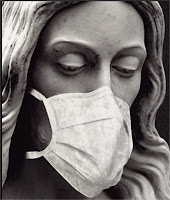
We Choose Love Over Fear - CRC Office of Social Justice

"The Bible is clear that there is no fear in love. They are at opposite ends of the spectrum. Fear has to do with punishment. Love has to do with seeing Christ in all, especially the distressed."

Love versus fear.

We are living in a time, in a world, in which fear rules our hearts. Fear that has been woven into the very fabric of our society; fear that we carry around as a heavy burden in our bodies, and in our souls.

The Bible is clear that there is no fear in love. They are at opposite ends of the spectrum.  Fear has to do with punishment. Love has to do with seeing Christ in all, especially the distressed.

Now is the time as Christ followers to choose: do we want to live in the spirit of fear, or do we want to embody the perfect love of God in this world? We cannot choose both.

-----

It can be all too easy to be swallowed up by fear.

It's acceptable, in the eyes of many, to continue putting up walls, turning back boats, not saving those in distress in the middle of the sea, imprisoning those who dared try to cross a man-made border “illegally”.

Many justify these acts by saying that they are not our brothers and our sisters, they are not our neighbors, they are not aliens living in our land…they are others.

It can be all too easy to say, “Well, many of them are Muslims…” and deny the love of Christ to those who are believers of different religions (or of no religion).

We choose love. It is not always easy. It does not always feel safe. It takes work. But we choose love.

The full article is available here

Saturday, January 21, 2017

Let Us Go Out With A Divine Dissatisfaction - Rev Martin Luther King Jr

Quotes from Southern Christian Leadership Conference address on  August 16th, 1967.

Let us go out with a divine dissatisfaction.

Let us be dissatisfied until America will no longer have a high blood pressure of creeds and an anemia of deeds.

Let us be dissatisfied until the tragic walls that separate the outer city of wealth and comfort and the inner city of poverty and despair shall be crushed by the battering rams of the forces of justice.

Let us be dissatisfied until those that live on the outskirts of hope are brought into the metropolis of daily security. Let us be dissatisfied until slums are cast into the junk heaps of history, and every family is living in a decent sanitary home.

Let us be dissatisfied until every state capitol houses a governor who will do justly, who will love mercy and who will walk humbly with his God. Let us be dissatisfied until from every city hall, justice will roll down like waters and righteousness like a mighty stream.

Let us be dissatisfied until that day when the lion and the lamb shall lie down together, and every man will sit under his own vine and fig tree and none shall be afraid. Let us be dissatisfied.

The road ahead will not always be smooth. There will be still rocky places of frustration and meandering points of bewilderment. There will be inevitable setbacks here and there. There will be those moments when the buoyancy of hope will be transformed into the fatigue of despair.

Our dreams will sometimes be shattered and our ethereal hopes blasted. Difficult and painful as it is, we must walk on in the days ahead with an audacious faith in the future.

Saturday, November 26, 2016

What Do Pipelines have to do with the Doctrine of Discovery? Do Justice

We've forgotten the wisdom of the ancient Hebrews, our ancestors of the faith, who understood that the created world is inherently sacred and pulses with the divine.
 

In 1493, Pope Alexander VI declared that any land not inhabited by Christians was free for the new generation of European explorers to take at will. History would remember this declaration as the third of three papal bulls that make up the Doctrine of Discovery, the legal and ecclesiastical justification for centuries of European theft of Native lands and genocide of Native peoples—imperialism baptized in the language of Christian mission.

The brutality and imperialism sanctioned by the Doctrine of Discovery is papered over in U.S. textbooks, glimpsed only in short units on the Trail of Tears or the massacre at Wounded Knee.

It's not hard to see this legacy playing itself out today. The exploitation and abuse rubber-stamped by the Doctrine of Discovery and played out in the rampant imperialism of the “Age of Exploration” is alive and well in the hearts and minds of Western economic, cultural, and political institutions today.

The Western imagination has been utterly colonized by the cold calculus of Discovery, convincing us that the earth is nothing more than inert raw material meant to fire our industrial machines and that non-white lives matter only if they can be assimilated into dominant Western culture to fuel ever more exploitation; of ever more “discovery”.

We have forgotten the wisdom of the ancient Hebrews, our ancestors of the faith, who understood that the created world is inherently sacred and pulses with the divine. Dismissed is the spirituality of Indigenous communities who recognize humanity’s place inside of, and dependent upon, the great web of beings.

The full article is available here

Thursday, October 20, 2016

What I Would Change About Our Immigration Conversation - CRC Network

So much of the conversation about immigration during this election season has not been based on facts or on the biblical value of philoxenia.

There has been much talk about immigrants—and not enough listening to immigrants themselves.

How does the immigration conversation need to change?

Four immigrants will speak up from their experience this month on Do Justice. Sign up to receive the posts in your inbox here.

Let’s change the conversation about immigrants. #BlessingNotBurden

Check out the posts that have gone up so far:

Diversity is Our Greatest Strength: Sarahi

Immigrants come with Skills, Drives, and Passion: Berniz

Thursday, August 13, 2015

Call To Worship: Justice, Love, Mercy (based on Amos 5:24)

God, you have told us what is required: to do justice, to love kindness, and to walk humbly with you.

Spirit, move us to surrender our apathy and to move into action, so that justice rolls like ocean waves.

Jesus, help us to surrender our self-centeredness so that redemption pours out like a rushing river.

Holy Trinity, make us willing to give of ourselves to your creation. Thank you for continually moving within, around, and through us through the flow of your unforced rhythms of grace.

For this, we give you praise.