Showing posts with label Thought. Show all posts

Saturday, May 16, 2026

Jesus' Great Commission = A Rebuttal To Nationalist Christianism & Rededicate 250 - by Rev Jim Wallis at Religion News

Jesus' Great Commission is a repudiation of White Nationalist Christianism.

Jesus' Great Commission offers a direct rebuttal to the Nationalist Christianism vision on display by some politicians today and at Rededicate 250.

Its call to make disciples of all nations rejects any privileged status for the USA, or for any racial or ethnic group, and, by its own logic, is a repudiation of White Nationalist Christianism.

Equally important is the distinction between making disciples and making converts. Jesus' Great Commission is an invitation into the life, teachings and values of Jesus — love, justice, compassion, forgiveness and care for others.

The kingdom of God, in other words, is not a political regime or a national identity. It belongs to the whole world.

The full article is available here 

Sunday, June 30, 2024

Why Should We Christians Keep Gathering As The Church? - Martha Tatarnic in The Christian Century

The inescapable truth for every creature on this planet is that we are connected.  (All of) our lives are finally and forever bound together.  When done correctly, we as the gathered church bear witness to this. 

Whether or not an individual participates in a faith community, the inescapable truth for every creature on this planet is that we are connected. I might wish that I could pick and choose which parts of the universe and which of God’s creatures share in that connection, but God is a pretty good door crasher when it comes to the gates of my heart.

As COVID made clear, we are radically infected by one another’s oxygen and water vapor and germs and skin molecules.  At the same time, our souls actually can’t know and love God without one another.  

We Christians gather together because the church bears witness to this interconnected truth of who we really are.

The gathered church bears witness - for us and for the world - the truth of how our lives are finally and forever bound together.

The full article is available here

Sunday, March 24, 2024

Pilate's Military Entry To Passover Jerusalem: The Other Palm Sunday Procession - Father George Corrigan

Jesus’ procession proclaimed the kingdom of God; Pilate’s proclaimed the violent military power of empire and Roman imperial theology, worshiping the emperor as god. Which procession will each one of us choose?


Each year at Passover, Pontius Pilate, Governor and representative of the Roman emperor, came to Jerusalem from his coastal residence in the west. He entered Jerusalem at the head of a column of imperial cavalry and soldiers. From the east, Jesus entered Jerusalem on a donkey.

Two processions: Jesus’ procession proclaimed the kingdom of God; Pilate’s proclaimed the violent military power of empire and Roman imperial theology, worshiping the emperor as god. Pilate’s procession embodied the power, glory, and violence of the empire that ruled the world. Jesus’ procession embodied an alternative vision; the Kingdom of God.

Which procession will each one of us choose?

It is easy to just wave a palm branch at church, sing a few rounds of “Hosanna,” and go home. The actual praise and worship Jesus invites me to enact on Palm Sunday is far riskier.

The full article is available here

Monday, February 26, 2024

Biblical Understanding Of "Satan" Differs From Miltonian Understanding Of Western Christianity

In the Old Testament, the word "satan" is used more as a descriptor than a name. Characters called "satan" alternately test, torment, and spare various righteous people.


If you ask just about any Christian what the word “Satan” is, they will tell you that it is the name of The Devil. Those who are fans of Milton’s “Paradise Lost” will say that Satan is the name of Lucifer after he fell from heaven. Ironically, this understanding has a somewhat shaky foundation in Scripture.

Satan is often used as a proper name in Western Christianity today, but it is actually a descriptor or a title. In the ancient Hebrew versions of the Old Testament, there are repeated appearances of figures called satan or sometimes ha satan. These words mean, respectively, “an adversary” and “the adversary.” The figures do not always act like the Devil that Christians envision. The various figures alternately test, torment, and spare various righteous people.

Depending on how satan acts in each story, modern translations refer to the character in a variety of ways. The Hebrew ha satan is translated as “the Enemy,” “Satan” and, in one notable case in Numbers, "an angel of the Lord." The word satan is also used to describe human enemies of the tribes of Israel such as Hadad the Edomite.

The use of the word “satan” gets a bit more complicated in the New Testament due to how many different languages the ancient texts were written in. Sometimes “satan” is used as a proper name, but other times the tradition of the Old Testament continues, and the word is used more as a descriptor than a name.

The full article is available here

Friday, October 13, 2023

The Hermeneutics of Christian Zionism Critiqued - Stephen Sizer

Due to their erroneous interpretation of scripture, Christian Zionists incorrectly set the current nation state of Israel and the Jewish people apart from and above all other people groups; when in reality, all peoples are fully and coequally human and loved in the the eyes of God.

Christian Zionism encourages the continued military and economic funding of Israel by the United States, identifies with right-wing Israelis who resist negotiating land for peace, reinforces Israel's apartheid policies, and sanctifies the illegal settlement and absorption of the Occupied Territories into the State of Israel.

The most basic hermeneutical error which Christian Zionists consistently repeat is thinking that the Old Covenant before Jesus applies to the current nation state of Israel.

Due to their incorrect interpretation of scripture, Christian Zionists incorrectly set the current nation state of Israel and the Jewish people apart from and above other peoples in the Middle East and all of humanity, when in reality all peoples are fully and coequally human and loved in the the eyes of God.

The reality is that Biblical prophecy is invariably conditional rather than fatalistic. The Christian Zionist's particular reading of both history and contemporary events - determined by the dubious exegesis of highly selective biblical texts as well as their theological presuppositions - is therefore fatalistic. 

The full piece is available here

Friday, December 23, 2022

Hope and Steadfast Love: Jodi Koeman at CRC Office of Social Justice


Preparing for Christ means hoping and loving. 

We need love in order to live a life that embraces people – no matter who they are, what they look like, where they’ve come from, or how “perfect” or broken they are – and that seeks their flourishing along with all of creation and God’s creatures.

Preparing for Christ means hoping and loving. While our “souls wait for the Lord,” may we actively prepare for Christ by radically loving the world as God loves.

The full article is available here

Wednesday, June 22, 2022

Lost In Meaning: Meaning in Leviticus 18:22

A careful philological, literary analysis of the original Hebrew in Leviticus 18:22 seems to show a condemnation of rape and incest.

It turns out that the original Hebrew language in Leviticus 18:22 is more ambiguous than the traditional English translation.

The addition of propositions by English translators alters the verse’s meaning and presupposes a comparison between a “normal” action and a “deviant” action.

The other occurrence of the Hebrew word miškevē in scripture is in Genesis 49:4. That verse explicitly refers the deviant nature of the incestuous activity of Reuben with his father’s concubine, Bilhah.

This understanding of Genesis 49:4 helps Leviticus 18:22 makes sense in the context of its chapter. A large portion of Leviticus 18 proscribes the divine condemnation of incest.  

While Leviticus 18 focuses on the forbidden sexual relationships, Leviticus 20 focuses on the punishment for participating in such relationships. The laws are reordered in Leviticus 20 to emphasize consequences of deviant relationships. The miškevē iššâ is an act that is punished identically to other acts that are clearly incestuous.

The full article is available here

Tuesday, June 21, 2022

The 1946 Mistranslation That Introduced The Word "Homosexual" To The Bible - The Forge Online

The Greek word arsenokoitai shows up in several different verse in the Bible, but it wasn't until 1946 that it was mistranslated to mean "homosexual."

For most of European history, most translations properly understood Leviticus 18:22, Leviticus 20:13, 1 Timothy 1:10 and 1 Corinthians 6:9 to be discussing "boy molesters" based on the original Greek word arsenokoitai (for example, the 1674 Swedish translation and the 1830 Norwegian translation). 

The verses were meant to address and ancient world practice in which young boys (8-12 years old) were coupled by older men. Ancient Greek documents show us how even parents utilized that abusive practice to help their sons advance in society. 


The Greek word arsenokoitai shows up in several different verse in the Bible, but it wasn't until 1946 that it was mistranslated to mean "homosexual." The Revised Standard Version made an honest mistake in mistranslating. 

Had it instead taken the time to do the proper research into the historical contextualization, we would have a more accurate translation.  We could have avoided the horrible damage that was done from pulpits all across the U.S. church. Sadly, modern biblical commentaries have adjusted to accommodate the mistranslation.

Interestingly, the German Bible didn't include the word "homosexual" until 1983 thanks to a U.S. company, Biblica, paid for a new translation and influenced it. 

The full article is available here

Saturday, January 8, 2022

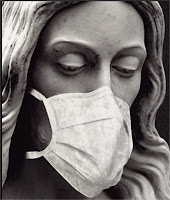
Jesus Would Wear a Mask - CRCNA Network


 "Jesus loved God and loved his neighbors. If Caesar said not to wear a mask but experts said it would protect the vulnerable anyway, Jesus would still have worn a mask."

The full article is available here

Saturday, December 5, 2020

Eurotheism vs Christianity - Dr. Cheryl Coleman

Eurotheism is "a pervasive and influential alternative view of Christianity that reveals itself through many factors." In contrast to Christianity - it holds to notions of:

(A) faith belief and practice based on traditional European thought and experience (while Christianity supports the adherence to and practice of Biblical thought and teachings, which are meant to transcend cultural or socially constructed thoughts and teachings)

(B) racial/ethnic stratification and ethnocentrism, which lends to a perception that Non Whites hold second class citizenship to Whites in society and in the Christian church (while Christianity reveals that God is no respecter of persons, God has no favorites, and everyone is regarded equally)

(C) forceful stances in market capitalism, individualism, competition, self-preservation and self-indulgence (while Christianity overwhelmingly embodies care for others, self-sacrifice, justice, and charity)

(D) alterations to Christianity based on changing social or social political factors that support a worldview through a European-American lens that may also include typically conservative political or non- religious ideology (while Christianity supports consistency in ideas and attitudes based solely on Biblical thought about God's character)

(E) nationalism and patriotism that regards European Americanism as Christianity by default (while biblically, one’s nationality or place of citizenship, cannot be found nor named as a way to know and experience God)

(F) cultural pride and identity (versus identity in Christ)


Dr. Cheryl Coleman (2017)

Tuesday, December 1, 2020

Evangelical NIH Head: Churches Shouldn't Return To In-Person Worship Yet - NPR

Evangelical Francis Collins - head of the National Institutes of Health and himself a church-goer - says that because of how the COVID pandemic is going currently, churches shouldn't return to in-person worship yet:
"Churches gathering in person is a source of considerable concern and has certainly been an instance where super-spreading has happened and could happen again. So I think most churches really ought to be advised, if they're not already doing so, to go to remote, virtual kinds of services."
The full article is available here

Friday, November 27, 2020

The Song ‘Mary Did You Know’ Cloyingly Misses The Point

“Mary’s Magnificat is subversive. We may want songs with sentimentality, but Mary knows - seemingly better than we do - that the messiah that is coming is going to turn our world upside down."  - Pulpit Shenanigans 

Sunday, November 15, 2020

Andy Stanley: Trump Evangelicals Hurt Church's Ability To Reach People - The Atlantic

Stanley and his allies are now saddled with an image of evangelicalism they don’t want and didn’t create.

As a young man, Andy Stanley yearned to reach people beyond the conservative Christian world, to make the story of the resurrection irresistible to the unchurched. So he rejected his culture-war inheritance and struck out on his own.

Stanley declined to join his friends in ministry on the Trump train, waving them off when they texted selfies from Trump Tower. But neither has he joined the evangelical resistance.

But while Stanley and similar giants inside the evangelical world have largely stayed out of politics during the Trump years, other evangelicals have been busy telling the outside world that their faith is completely aligned with Trumpism.

This has created a dilemma: Stanley and his allies are now saddled with an image of evangelicalism they don’t want and didn’t create. Before they can reach anyone with a message of faith over politics, they’ll have to contend with the political baggage their fellow Christian leaders created.

The full article is available here

Sunday, October 4, 2020

Stop Taking 2 Chronicles 7:14 Out of Context - Apologetic Junkie

We can’t take an Abrahamic Covenant promise out of its context, claim it for ourselves when it was never given to us, and assume that if we do these things then God is somehow obligated to renew the U.S. 


2 Chronicles 7:14 is not a magic formula for spiritual revival.

It is entirely presumptuous for Christians in the U.S. to quote a verse such as this and claim the promise for themselves.

The U.S. is not God's chosen nation or land. U.S. Citizens are not God's chosen people.

The U.S. is nowhere to be found in this passage nor is any other nation other than the Ancient Near Eastern kingdom of Israel at the time of Solomon.

What is the broader context of this passage? This is always an important question to start with whenever we are seeking to correctly interpret and apply a scripture.

Very briefly, as we read the beginning chapters of 2 Chronicles we discover that Solomon is preparing to build a temple in Jerusalem (chapters 2-5). He completes the temple and dedicates it with a prayer before all the assembly of Israel (chapter 6). Then Yahweh appears to Solomon with both a promise and a warning starting in verse 19, which is important context not include by those who remove verse 14 from its setting.

We can’t take an Abrahamic Covenant promise out of its context, claim it for ourselves when it was never given to us, and assume that if we do these things then God is somehow obligated to renew the U.S.

2 Chronicles 7:14 is not a magic formula for spiritual revival.

The full article is available here


Thursday, August 27, 2020

Dear Church, Refuse To Be In Denial About Racism - Melissa Stek in CRC Network

Until we can admit that we are people in need of recovery from systemic racism and white supremacy, we will never make progress in racial reconciliation.


I am a recovering racist, working to overcome the lies ingrained in me by white supremacy and a racialized society. The cultural messages I received were products of a racialized society, communicating to me the supposed meaning and value of whiteness versus colored-ness

I have always been a beneficiary of white privilege as a person that fits our culture’s physical appearance standards of “white.”

Until we can admit that we are people in need of recovery from systemic racism and white supremacy, we will never make progress in racial reconciliation; we will never heal the wounds and cancer of white supremacy.

The first step is to step out of our denial. It’s not enough for me to say, “I’m not individually racist,” and think that my work is done. 

We must be open to uncomfortable surrender to truth and reality in order to shake ourselves free from the lies we have absorbed about race and whiteness.

The full article is available here

Monday, August 3, 2020

Penal Substitutionary Atonement: Why Trump Is Direct, Logical Result of Flawed Conservative Evangelical Theology - New Humanity Institute

The Calvinist Puritans incorrectly saw a retributive justice in the Mosaic Law and thought it should be applied to the colonies. The Religious Right believes the same today.  Consequently, Conservative Evangelicalism's inability to apply the ethics of Jesus to public policy leaves rank and file churchgoers vulnerable to those - like Trump - who can exploit their tribal fear of others and irrational persecution complex, which makes them want to lash out in punishment.

Conservative Evangelicalism in the U.S. has a long tradition of being racist, even if individuals may not be personally racist.  It has been unable to pastorally and structurally deal with racism.

This is at least in part a result of its flawed understanding of Old Testament being about retributive justice, rather than restorative justice. 

In the 3rd Great Awakening, U.S. Evangelicals divorced evangelicalism from love of neighbor and from any serious reflections on the use of economic or political power.  Dwight Moody and others divorced evangelism from discipleship.

Penal Substitutionary Atonement, a flawed theology that is a staple of  Conservative Evangelicalism, reinforces individualism emotionally.  It defines salvation in terms of escaping retributive justice and the wrath of God - instead of in the classical/Nicene sense of healing from the corruption of sin within ourselves.

This has the psychological and social consequence of reducing people down to souls and not also bodies, giving Conservative Evangelicalism a strongly gnostic flavor that fits with a lack of care for the bodies of others necessary for compassion and social justice.

As a result, Conservative Evangelicals promote ideas like the tough father at home, meritocracy, a workplace without unions or regulations, and a society without social safety nets.  It is a paganized sect of Christianity that believes an angry God needs to be appeased through the sacrifice.

Conservative Evangelicalism's inability to apply the ethics of Jesus to public policy leaves rank and file churchgoers vulnerable to those - like Trump - who can exploit their fear of others and irrational persecution complex.

Given Conservative Evangelicalism's strong support for an ethic of retribution in public and economic life, a narcissistic bully like Trump may have been inevitable.  The Calvinist Puritans incorrectly saw a retributive justice in the Mosaic Law and thought it should be applied to the colonies. The Religious Right believes the same today.

The full article is available here

Thursday, June 18, 2020

We Must Not Go Back to Normal - The Network, Christian Reformed Church in North America


At some point we all would like to get back to some kind of normal. But we should not go back to a dysfunctional normal (of white privilege and systemic racism).

"Normal" has not been good for everyone. It is time for a normal that restores an identity in Christ in us and all of our neighbors, especially our Black neighbors.

My normal as a white person does not require me to think about who might be watching me or how my actions might look to someone else merely due to the color of my skin. I can pass by neighbors, most of whom are strangers, without people perceiving me as a threat or wonder what I’m doing.

Black people in the U.S. live a different reality on a daily basis than I do as a white person.  Their reality is one that they can't step away from because they're perpetually being judged by their skin color.

The reality of systemic racism requires our Black brothers and sisters to be wary, on guard, careful about their surroundings and the people near them 24/7 - whether going for a run, a drive in the car, shopping, or bird-watching.

That’s their normal, and we should not go back to that normal.

Black leaders are speaking and creating a new path forward. It is time for a normal that listens and seeks to understand.

If we wish to be faithful to God in doing to others as we would have them do to us, we must do something. The racism baked into the systems of our society will not change unless we continually take action.

The full article is available here

Monday, June 15, 2020

I Have Prejudices and I'm Part Of Systemic Racism - Rev Jennifer Holmes Curran in The Banner

Racism degrades bearers of God’s image, even while it distorts our own humanity. It is abhorrent in God’s eyes. And I am complicit in systemic racism as a white person to the extent that I benefit from it and to the extent to that I fail to fight against it.

As a white person, racism has been trained into me through a lifetime of stereotypes in movies, TV shows, and the news. It is part of my felt experience, living “across the tracks” from the more dangerous and diverse neighborhoods.

There are lots of different definitions of racism, but any worthwhile definition has to include prejudice against someone of another skin color or ethnicity.

While I have prejudice, my racism is much bigger than it. That's why it is so important to note that prejudice is much more destructive when it is perpetrated by a dominant culture.

I didn’t make all of these structurally racist problems happen, but in the end, just by virtue of being identified as white, I stand on one side of this conversation. Because I am white, I can have the luxury of not thinking about these problem and the luxury of not working to fix them. I am complicit to the extent that I benefit from them and to the extent to which I fail to fight them.

My racism degrades bearers of God’s image, even while it distorts my own humanity. It is abhorrent in God’s eyes. And I am guilty of it.

Confession returns me to the humility I need to be able to listen to my brothers and sisters of color. Knowing I am a part of the problem makes me want to press in and keep learning. Knowing the bottomless grace and love of God gives me a sense of steadiness when I feel defensive. It allows me to slow my knee-jerk reactions so I that can try to understand.

The full article is available here