Monday, October 17, 2022

Benediction: The Infinite Goodness Of God Is Meant To Be Shared (based on Ephesians 3:18)

The bottomless depth of God's mercy, the infinite expanse of God's grace, and the endless wellspring of God's love: all of these are available to us as we join in God's work of restoring all of creation to thriving life.

May we bring hope and light to our corners of this world which God created and called “good.”

Tuesday, September 13, 2022

Benediction: God, The Life-Giving Trinity (based on Ephesians 2:22)

The incarnate words that God speaks are the life and sustenance of all things. The life that Jesus gives is the re-creation and renewed birth of all things. The Spirit which dwells within all of us is the inspiration for curiosity, seeking, and wisdom.

May we grow in awareness of how there are opportunities all around us do the work of our life-giving, life-restoring, and life-fulfilling God. May abundant life and grace flow out from us as we work to bring out the best in everyone and everything.

Monday, August 29, 2022

Benediction: Worship God In Hope (based on Luke 3:6)

based on Seasoned Justice by Reformed Worship


As we go from here back to where we live our everyday lives, may we all share God's love! God’s handiwork comes in many different colors, sizes, shapes and cultures. May we all proclaim God's peace!

May our hearts be filled with God’s grace and our hands be busy doing God's work. Now and with each new day, may we worship God in hope!

Benediction: Being The Hands and Feet of God To The World (based on 1 Corinthians 12:27)

As we go now to be God's presence in the world, may our eyes be open so that we see the world as God sees it. As we go now to be Christ's hands and feet in the world, may our hearts be open to both give and receive.  As we go now to be the Spirit's hope for the world, may our minds be open so that we welcome all as having been wonderfully created in the Divine Image. 

Wednesday, August 10, 2022

Benediction: Wrestling With Our Struggles Is The Way To Growth (based on Genesis 32:22-32)


May we hold onto the hope of God’s love even in the midst of struggle. When times of struggle inevitably come our way, may they help to knock loose the anything within us which has gotten stuck or has become stagnant.

May we always seeking to more fully become who we've been designed to be; people who both reflect and put into action the boundless love, compassion, and grace of God. 

Sunday, August 7, 2022

Benediction - Growing Towards What We Are Designed To Be (based on Romans 13:10)


God desires to help all of us to continue growing towards becoming the loving, giving, and life-filled people which we are designed to be. As recipients of God's bottomless grace, may we be grace-givers in this world which God created and calls "good."

Sunday, July 3, 2022

Benediction: God, Make Us Human Together in Goodness (based on Genesis 1:31)


In our everyday lives in God's world, may we look for the divine spark which is present in everyone and everything. May that awareness of the inherent dignity and worth of all cause compassion to move within us and grace to flow outward from us.

May God's love help to make us human together, by which we will be a true reflection of God's infinite diversity, beauty, goodness, and grace.

Wednesday, June 22, 2022

Lost In Meaning: Meaning in Leviticus 18:22

A careful philological, literary analysis of the original Hebrew in Leviticus 18:22 seems to show a condemnation of rape and incest.

It turns out that the original Hebrew language in Leviticus 18:22 is more ambiguous than the traditional English translation.

The addition of propositions by English translators alters the verse’s meaning and presupposes a comparison between a “normal” action and a “deviant” action.

The other occurrence of the Hebrew word miÅ¡kevÄ“ in scripture is in Genesis 49:4. That verse explicitly refers the deviant nature of the incestuous activity of Reuben with his father’s concubine, Bilhah.

This understanding of Genesis 49:4 helps Leviticus 18:22 makes sense in the context of its chapter. A large portion of Leviticus 18 proscribes the divine condemnation of incest.  

While Leviticus 18 focuses on the forbidden sexual relationships, Leviticus 20 focuses on the punishment for participating in such relationships. The laws are reordered in Leviticus 20 to emphasize consequences of deviant relationships. The miškevē iššâ is an act that is punished identically to other acts that are clearly incestuous.

The full article is available here

Tuesday, June 21, 2022

The 1946 Mistranslation That Introduced The Word "Homosexual" To The Bible - The Forge Online

The Greek word arsenokoitai shows up in several different verse in the Bible, but it wasn't until 1946 that it was mistranslated to mean "homosexual."

For most of European history, most translations properly understood Leviticus 18:22, Leviticus 20:13, 1 Timothy 1:10 and 1 Corinthians 6:9 to be discussing "boy molesters" based on the original Greek word arsenokoitai (for example, the 1674 Swedish translation and the 1830 Norwegian translation). 

The verses were meant to address and ancient world practice in which young boys (8-12 years old) were coupled by older men. Ancient Greek documents show us how even parents utilized that abusive practice to help their sons advance in society. 


The Greek word arsenokoitai shows up in several different verse in the Bible, but it wasn't until 1946 that it was mistranslated to mean "homosexual." The Revised Standard Version made an honest mistake in mistranslating. 

Had it instead taken the time to do the proper research into the historical contextualization, we would have a more accurate translation.  We could have avoided the horrible damage that was done from pulpits all across the U.S. church. Sadly, modern biblical commentaries have adjusted to accommodate the mistranslation.

Interestingly, the German Bible didn't include the word "homosexual" until 1983 thanks to a U.S. company, Biblica, paid for a new translation and influenced it. 

The full article is available here

Thursday, May 19, 2022

Benediction: God Welcomes All Who Seek And Question (based on Matthew 7:7)

Since God created life and the universe in original goodness and can be found anywhere and everywhere in it, of course God welcomes our questions. God also spurs on the growth that often results from us faithfully pursuing our questions.

So may that growth occur in our lives and may we be continually aware of God's surrounding and indwelling presence.

Saturday, January 8, 2022

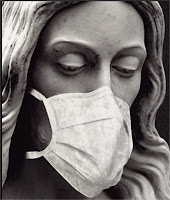
Jesus Would Wear a Mask - CRCNA Network


 "Jesus loved God and loved his neighbors. If Caesar said not to wear a mask but experts said it would protect the vulnerable anyway, Jesus would still have worn a mask."

The full article is available here

Tuesday, September 28, 2021

Benediction: Faith Leaves Room For Mystery (based on Romans 8:26)


Faith does not require certainty.  Rather, it is a hopeful trust that God is inherent in all things, is accessible to us in our seeking, and is in the business of renewing and restoring the universe back to its Original Goodness.

May we be willing to dwell within the tension of our questions and the unknown so that we can partner with God in the work of bringing out the best in everyone and everything.

Saturday, December 5, 2020

Eurotheism vs Christianity - Dr. Cheryl Coleman

Eurotheism is "a pervasive and influential alternative view of Christianity that reveals itself through many factors." In contrast to Christianity - it holds to notions of:

(A) faith belief and practice based on traditional European thought and experience (while Christianity supports the adherence to and practice of Biblical thought and teachings, which are meant to transcend cultural or socially constructed thoughts and teachings)

(B) racial/ethnic stratification and ethnocentrism, which lends to a perception that Non Whites hold second class citizenship to Whites in society and in the Christian church (while Christianity reveals that God is no respecter of persons, God has no favorites, and everyone is regarded equally)

(C) forceful stances in market capitalism, individualism, competition, self-preservation and self-indulgence (while Christianity overwhelmingly embodies care for others, self-sacrifice, justice, and charity)

(D) alterations to Christianity based on changing social or social political factors that support a worldview through a European-American lens that may also include typically conservative political or non- religious ideology (while Christianity supports consistency in ideas and attitudes based solely on Biblical thought about God's character)

(E) nationalism and patriotism that regards European Americanism as Christianity by default (while biblically, one’s nationality or place of citizenship, cannot be found nor named as a way to know and experience God)

(F) cultural pride and identity (versus identity in Christ)


Dr. Cheryl Coleman (2017)

Tuesday, December 1, 2020

Evangelical NIH Head: Churches Shouldn't Return To In-Person Worship Yet - NPR

Evangelical Francis Collins - head of the National Institutes of Health and himself a church-goer - says that because of how the COVID pandemic is going currently, churches shouldn't return to in-person worship yet:
"Churches gathering in person is a source of considerable concern and has certainly been an instance where super-spreading has happened and could happen again. So I think most churches really ought to be advised, if they're not already doing so, to go to remote, virtual kinds of services."
The full article is available here

Friday, November 27, 2020

The Song ‘Mary Did You Know’ Cloyingly Misses The Point

“Mary’s Magnificat is subversive. We may want songs with sentimentality, but Mary knows - seemingly better than we do - that the messiah that is coming is going to turn our world upside down."  - Pulpit Shenanigans 

Sunday, November 15, 2020

Andy Stanley: Trump Evangelicals Hurt Church's Ability To Reach People - The Atlantic

Stanley and his allies are now saddled with an image of evangelicalism they don’t want and didn’t create.

As a young man, Andy Stanley yearned to reach people beyond the conservative Christian world, to make the story of the resurrection irresistible to the unchurched. So he rejected his culture-war inheritance and struck out on his own.

Stanley declined to join his friends in ministry on the Trump train, waving them off when they texted selfies from Trump Tower. But neither has he joined the evangelical resistance.

But while Stanley and similar giants inside the evangelical world have largely stayed out of politics during the Trump years, other evangelicals have been busy telling the outside world that their faith is completely aligned with Trumpism.

This has created a dilemma: Stanley and his allies are now saddled with an image of evangelicalism they don’t want and didn’t create. Before they can reach anyone with a message of faith over politics, they’ll have to contend with the political baggage their fellow Christian leaders created.

The full article is available here