

Friday, April 17, 2015
Wednesday, April 15, 2015
Living Into God's Story - by Eugene Peterson

The Bible is basically and overall a narrative, an immense, sprawling, capacious narrative. Stories hold pride of place in revealing God and God's way to us. It follows that storytellers in our Christian community carry a major responsibility for keeping us alert to these stories and the way they work.
There is a reason for the appropriateness of story as a major means of bringing us God's Word. Story doesn't just tell us something and leave it there; story invites our participation. A good storyteller gathers us into the story.
Of course, not all stories are good; some lack honesty. There are sentimentalizing stories that seduce us into escaping form life; there are propagandistic stories that attempt to enlist us in a cause or bully us into stereotyping responses; there are trivializing stories that represent life as merely cute or diverting.
The Bible's honest stories respect our freedom; they don't manipulate us, don't force us, don't distract us from life. They show us a spacious world in which God creates and saves and blesses. They invite us in an participants in something larger than our sin-defined needs, in something truer than our culture-stunted ambitions.
We don't live our lives by information. We live them in relationships in the context of a community of men and women - each person an intricate bundle of experience and motive and desire, and of personal God, who cannot be reduced to formula or definition, who has designs on us for justice and salvation.
When we lose touch with our lives, our souls - our moral and spiritual, our God-personal lives - story is the best way of getting us back in touch again.
Maybe it is because Scripture comes to us so authoritatively, "God's Word," that we think all we can do is submit and obey. Submission and obedience are part of it, but first we have to listen. And listening requires hearing the way it is said (form) as well as what is said (content). Stories suffer misinterpretation when we don't submit to them simply as stories.
Spiritual theology, using Scripture as text, does not so much present us with a moral code and tell us, "Live up to this," nor does it set out a system of doctrine and say, "Think like this." The biblical way is to tell a story and invite us, "Live into this - this is what it looks like to be human in this God-made and God-ruled world; this is what is involved in becoming and maturing as a human being."
The full article is available here


Wednesday, April 8, 2015

Saturday, April 4, 2015
Holy Saturday: Take Time To Sit at Your Tomb - from Progressive Red Neck Preacher

But really, who wants to think about what this day was like? Jesus, buried behind a tomb. Judas hanging himself on a tree. The disciples hiding in fright, scattered to the four winds in fear.
The hopes of all who followed Jesus shattered and lost… From the appearance of all who looked up, a day in which evil won, where injustice reigned triumphant, where oppression rules.
To truly appreciate the full depth of Easter, we need to take space to sit with the bitter pain of Holy Saturday, to sit at the tomb where Jesus lays, to face our own tombs.
We need to stay a while with the disciples, to hear the cry of mother Mary as her baby boy lays in the tomb. I think as we do so, we can find Holy Saturday teaching us great things.
First it shows us the value of sitting with our own experience of pain and forsakenness, when so often we talk as if our experience of pain, of anguish, of uncertainty, and of doubt are signs that we have lost our way, that we have gone down the wrong road.
Holy Saturday teaches us that trying to reach Easter, new beginning, and hope before we - like Jesus - sit in the midst of death, of grief, of loss, of terror, and total abandonment can mean not yet being ready. Facing and admitting our pain and heartache is part and parcel of the call of Holy Saturday.
On Holy Saturday, Jesus takes into God’s self the experience of death, of abandonment, of guilt and of hell. On this day, as one of us, God experiences what it means to be totally abandoned by God. This means in the heart of our experiences of grief, of terror and abandonment, we are not alone though, as Jesus did on the cross, we do feel abandoned in those moments.
This is why as he died Jesus cries out “My God, My God, why have you forsaken me?” and why Christian mystics have talked about the need to face the dark night of the soul.
The full article is available here
Tuesday, March 31, 2015
Living Well Amongst Religious Diversity - CRC Network

We need more conversation on living well amongst religious diversity in our inter-religious global community. All that this means is simply being willing to share what we believe as we listen to the beliefs of others in openness and love.
How do we apply the principles of love, hospitality and civility in our interactions with believers of other faith traditions.
How can we increase peace between these diverse communities? Todd Johnson and Cindy Wu suggest four ways that we can live better in the midst of diversity and plurality.
1. Lower suspicion. In both Canada and the United States, there is increasing rhetoric about the dangers of Islamic terrorism. Yes, groups like ISIS/L are a serious problem, but most Muslims distance themselves from these extremist groups. Let us not allow this present climate of fear to keep us from listening to the felt needs and concerns of this community.
2. Become more informed. Learn more about the faith groups in your community and take time to meet practitioners of those faiths. (It's also well-worth learning the truth about the religious extremism that has been/continues to be problematic within your own faith).
3. Encourage inter-faith dialogue. Often this can only happen with an official invite and some planning around a simple meal, and perhaps a brief dialogue centered on a basic question, such as “tell us about the founder of your religion.”
4. Practice hospitality. This comes naturally to us and so we shouldn’t shy away from practicing it.It does depend though on number 1 above. Number 2 also helps in knowing what is culturally appropriate. Number 3 can be the vehicle for practicing hospitality.We need to be challenged to live well in a pluralistic society.
The full article is available here
Friday, March 27, 2015
Subversive Little Crumbs - Joe Kay in Sojourner's

Jesus broke bread in radical ways. No wonder the self-important wanted to get rid of him.
He broke it and gave it to whoever wanted some. He transformed an ordinary loaf into something extraordinary: A moment of unqualified love for whoever needed love at that moment.
He invited those who were treated as outsiders to join the meal as VIPs.
In that day, meals were a reflection of the social order. The self-important sat in the favored spots and received the best food — kind of like today. They looked down upon everyone else, perhaps deeming them lazy or unworthy. Someone who should be ignored instead of loved.
That’s not how he saw it.
He shared the loaf equally and unconditionally. He challenged the notion that some of us deserve the bread more than others, or that some have earned it in some way. He adamantly opposed those who ignored the needy and judged others as unworthy.
Jesus broke bread in radical ways. No wonder the self-important wanted to get rid of him.
The full article is available here
Sunday, March 22, 2015
Benediction: In God's World, Let's Listen and Reach Out (based on Isaiah 30:21)

Responsive Call To Worship: We Have Come, Seeking (based on Proverbs 2:1-5)

Reader: We have gathered today, seeking
All: God, once again speak with wisdom that guides us
Reader: We have come to hear God's voice.
All: May we open our ears and our hearts.
Reader: May God once again respond with love deepens our compassion
All: For this boundless, we have come to give thanks together
Wednesday, March 18, 2015
What If Jesus Wasn't The (An) Answer - Cindy Brandt in Sojourners

I get it. The world continues to be troubled and broken. But Jesus as the answer? Too simplistic. The complexities of brokeness don't fit neatly into the problem/solution formula.
Brokeness is sometimes the moral failing of an individual’s choices. But those choices are almost always inextricably bound in relationship with other individuals, which together form a web of complex dilemmas making it impossible to pinpoint where the moral responsibility lies.
Other times brokeness is invisible and systemic. We are ensnared corporately on a daily basis — our complicity in a consumer society feeding upon greed, our participation in corrupting our environment, and our everyday purchases tainted by child and slave labors.
Answers are clear cut and devoid of mystery. Love is murky and nebulous, but endless in profound beauty. Answers are definitive and effortless. Love requires labor with no guarantees. Answers set up parameters and boundaries and gatekeepers. Love erases dividing lines and flings open gates.
Any time we try to confine God into a simplistic message small enough to fit onto a tract, a t-shirt or bumper sticker slogan or a 4-minute, feel-good Praise and Worship diddy, we cut out too many important details.
Jesus wasn't an answer. Jesus was love — a sentiment, or action, or spirit, that has been elaborated by poets and artists throughout the history of humanity, boundless in its outworking, limitless in its applications. In his time on earth, Jesus entered into our problem and he sat down and told us stories riddled with nuance and complexity, open to the interpretations of his listeners. Jesus entered into our problem and doled out not just one solution, but many different sorts.
The full article is available here
Sunday, March 15, 2015
Lent and Fossil Fuels - Do Justice!

I can only handle so much alarming news in one day. But I have found room in my alarm-quotient enough to care about this: our oceans are becoming more acidic.
Here’s what’s happening: as humans use more fossil fuels, the amount of carbon dioxide in the atmosphere increases, and much of it is absorbed by the ocean. It eventually dissolves there, making the water more and more acidic.
There are tiny organisms in the ocean called foraminifera. These little guys have shells that acid can gnaw right away. The more acidic the oceans have become, the harder it is for my foraminifera friends to create their shells.
Calcium-shelled species like foraminifera are a vital link in the marine food chain. That food chain travels all the way up to humans. Almost 3 billion people, mostly the poor, depend on fish for a large part of their daily protein. I care about the poor. So, suddenly, I care about acidic oceans.
It’s easy to get overwhelmed with all the alarming news we have to stomach. It’s easy to tune out certain reports, or refuse to engage. I can’t de-acidify the oceans. I can’t rescue the family on my street who is losing their home to foreclosure. I can’t fix our immigration system or solve my friend’s addiction. I can’t do much to set the world right.
Thank God it’s Lent. Thank God that it’s the season of remembering our limits. We are a sinful people. We follow a crucified Christ. We live in an imperfect world. And yet, there is still hope. Somehow, we’re always forgiven. Somehow, Easter always comes.
The full article is available here
Sunday, March 8, 2015
Reading The Bible How Conservatives Read The Qur'an - Mark Sandlin in Patheos

There's a been quite a tempest in conservative circles since President Obama talked about the problems of extremism in all kinds of religions at the National Prayer Breakfast last month.
Conservatives, and specifically the Religious Right, have been cherry picking verses from the Qur’an to argue that Islam is necessarily and uniquely more violent than Christianity in their hierarchy. They have gone this route as opposed to than a larger understanding of the overall text.
Just to show the folly of approaching a text in such a simple-minded and shortsighted way, I thought it might be interesting to pull a few verses from the Bible, apply the same kind of cherry-picking and consider the results.
- Kill all those who do not worship God. -- 2 Chronicles 15:12-13
- If a town begins to not worship God, kill them all! -- Deuteronomy 13:13-19
- Kill relatives if they try to lead you away from worshipping God. -- Deuteronomy 13:6-8
- It's ok to have slaves, you can beat them as long as you don’t kill them. -- Exodus 21:20-21
- You can sell daughter as sex slave if she's tread better than other slaves.-- Exodus 21:7-8
- Spanking is probably good, but never rule out death. - Exodus 21:15
- The only penalty for unfaithfulness is death. -- Leviticus 20:10
- Premarital sex is punishable by death! Well, for women. -- Deuteronomy 22:20-21
- It’s fine to rape an unmarried woman, but if caught give her Dad 50 shekels and marry her. -- Deuteronomy 22:28-29
If conservatives really want all Muslims to renounce the most horrific verses in their holy text, it would seem that Christians will need to do the same.
If you're unwilling to apply the same scrutiny to your own faith that you insist on applying to other people’s faith, then at some point, you are going to have to admit that your issue is not with their actual faith but with the fact they are different from you.
Like the Bible, the Qur’an has an over-arching theology which, ultimately, overrides the worst parts of the text.
The full article is available here
Wednesday, February 25, 2015
Reflection and Renewal: We Want Things Our Way (based on 1 Timothy 2:4)

But this can be difficult to do sometimes. We’re constantly bombarded with messages from other voices - voices that say we should make ourselves the center of our worlds, that we should narrow our focus on on just ourselves, and that we should pursue what will make us feel good right away.
As a result, we sometimes find ourselves pushing away from connection and community because we don't want anything to impede on our freewheeling and our ability to have things our way.
Other times we think we’re unworthy of being loved, have no value, and therefore assume that no one would ever want to have relationship with us.
It can be so easy for us to fall back into those ruts. We often get it wrong, so we come asking for forgiveness.
May your grace be a constant reminder of the good that we should wish for all of creation. May your love be a continual reminder of the inherent value we have and the original goodness you created the universe with.
May we stay committed to and remain active in the work of restoration and renewal in your world.
Amen
Responsive Call To Worship: Come, All Who Are Weary (based on Matthew 11:28-30)

Reader: Come, all that are weary; all that are carrying heavy burdens
All: In God, we can find rest
Reader: Come, take what God has to offer: love, forgiveness, and grace
All: In God, we can find peace
Reader: Come, let us give thanks to the source of all good things
Sunday, February 22, 2015
Wilderness Lessons: Jesus In The Desert - Kayla McClurg in inward/outward

Arising from the waters of his baptism, Jesus hears a voice calling him "Beloved." Yet it is the Spirit of this same voice that drives him out into the wilderness for a rigorous 40-day initiation.
Haven’t we, too, sometimes sensed a clear calling, only to find ourselves thrust soon after into the desert of suffering? In Mark’s telling, much of Jesus’ experience is left to our imaginations. He is, we are told, “tempted by Satan.” He is “with the wild beasts.” The angels “wait on him.” The details are not given, thus inviting us to enter the story and contemplate it as our own.
It takes real commitment to lay down important plans and projects and withdraw into the wilderness. So much momentum can be lost in 40 days.
By the time Jesus is back, John has been arrested. The movement falters. So soon, Jesus must face the very real possibility that their dream of God’s realm being embodied on earth might be lost. Maybe it is already too late. What good has the wilderness been? Has it taught him defeat or determination, cowardice or courage?
When he hears of John’s peril, Jesus leaves—going to the very region where John was taken, right into the heart of danger. Wilderness has shown him what matters most, and what time it really is.
“The time is now,” he begins to preach in John’s stead. “The realm of God is very near.” For every busy one of us, facing our daily urgencies, Jesus sets a new order, follows a new master. Dare we join him?
The full article is available here
Friday, February 20, 2015
Jesus: A Denouncer Of Piety - Frederick Buechner

Christ was a denouncer of a narrow and loveless piety, the scourge of the merely moral, the enemy of every religious tradition of his day, no matter how sacred, that did not serve the Kingdom as he saw it and embodied it in all its wildness and beauty.
Where he was, passion was, life was. To be near him was to catch life from him the way sails catch the wind.
When Jesus said, "I have not come to bring peace, but a sword," what he presumably meant was that it was not peacefulness and passivity that he came to bring.
Instead, he came to bring that high and life-breathing peace that burns at the hearts only of those who are willing to do battle, as he did battle, to bring to pass God's loving, healing, forgiving will for the world and all its people.
The full article is available here
Wednesday, February 18, 2015
Franklin Graham's Hypocrisy On Religious Violence - Craig M Watts at Red Letter Christians

In his remarks at the National Prayer Breakfast, essentially all that the President did was remind the group gathered for prayer that not only Islam but Christianity as well has been used to justify horrible violence and war.
Calling for a degree of religious humility and self-examination strikes me as a reasonable thing to do. Clearly there are many people who don’t agree. Franklin Graham is among them. Or at least he and others don’t agree when it is done by President Obama.
Many on the right want to justify or minimize the violence that has been done by Christians in the name of their faith. Or they suggest that even if Christians once did horrible things, those things were done long ago. Apparently the statute of limitations has passed. Ignore the fact that currently tens of thousands of Muslims are fleeing Christian militias in the Central African Republic or the terrorist attacks done by right wing Christians in recent years.
You might think Graham is a pacifist as he distances himself from the violent people who distort Christianity.
But if you think Franklin Graham is an advocate of nonviolence who opposes Christians engaging in violence and deadly conflict you would be mistaken.
When Jerry Falwell, the founder of the old Moral Majority and Liberty University, boldly proclaimed, “God is pro-war,” Franklin Graham didn’t object. To the contrary, at the time he was in full agreement.
Graham is not one prone to quote Jesus’ words, “Blessed are the peacemakers; they will be called children of God” (Matthew 5:9). That line doesn’t easily tumble from the lips of someone who can say, “There’s no excitement and thrill like the complexities of war. It heightens perceptions. The smell of gunpowder. The sound of shrapnel hitting a building. Everything in you slows down, except your reflexes. They become quicker, because all of life’s emotions are played out on a razor’s edge. Your instincts take over…. War satisfies my need for danger. I love to go places where bombs blow up.”
The full article is available here
The Infinite Silence Speaks - Gene Marshall at Progressive Christianity

The Infinite Silence Speaks
through every rustle of tree leaves,
through every singing bird,
through every sound of any kind,
and through the silent spaces between the sounds.
The Infinite Silence is Void and Darkness
but also Fullness, a dazzling back-light
that shines through
every gleaming tree, every shimmering squirrel
and surrounds every human being
with a halo.
Saturday, February 14, 2015
Finding Common Ground In The Names of God - The Banner

When retired school teacher Glenn Ploegstra began using the Names of God issue of theToday devotional in his discussion group with Muslims and Christians, he found a surprisingly common connection with people of traditionally different faiths.
Every three weeks Ploegstra and other Christians from various branches of Christianity meet with a group of Turkish students, mostly committed Muslims, at Cleveland State University in Ohio.
The gatherings—called the “Bible-Qu’ran Group”—began several years ago when Ploegstra’s friend Bill Schubmehl connected with the university students from Turkey.
These students, in addition to achieving their masters or doctorate degrees, also wanted to understand western culture and the Christian faith.
The meetings begin with a potluck buffet of ethnic foods brought by the participants. Then after a time of fellowship, members spend 60-90 minutes learning about Christianity one week and Islam the next.
“Our purpose is to understand one another, not to try convert someone to the other’s faith,” Ploegstra explains. “We've learned we have the same basic understanding of God’s character. Our discussions have been richer and more lively than past sessions.”
The full article is available here
Friday, February 13, 2015
Does Obama Owe Christians Apology for Speech at Prayer Breakfast? Micah Bales in Sojourner's

In his remarks at the National Prayer Breakfast, President Obama spoke about the reality that any religion, including Christianity, can be used as justification for acts of terror.
Why should I be offended by that?
That’s a fact. That’s our history. Every Christian should be aware of what we are capable of when we turn our eyes away from the self-sacrificing love of Jesus and instead turn Christianity into an ideology that justifies terror, brutality, oppression and war.
[In a recent speech, Dr. Michael Brown reminded, and in many cases, educated the Christians present about the horrors committed in the name of Christ during the period when Christians, under the banner of the cross, rode through Europe and terrorized the Muslim and Jewish population. He pointed out that even today, the Jewish people associate the word "Christian" with the Crusades.]We humans have a long track record of twisting our most precious faith into a weapon of violence and hatred. This shouldn't be a controversial statement; it should be a matter of ongoing repentance and prayer for people of faith everywhere.
Christians and conservatives condemned the President's comments as petty and off point. It was as if denying the truth of Obama's statements or his use of these facts as a warning regarding the dangers of religious extremism would make everything just go away.
Denying the truth, or pretending it doesn't matter, will never change the past. The Church is guilty of terrible acts in the Name of Christ, and we must own up to this. We can't act as if it's a bad dream that we can forget.
Pointing our fingers at the one sharing truth doesn't change the truth.
The full article is available here
Tuesday, February 10, 2015
Monday, February 2, 2015
Selma: MLK and US - Shannon Jammal-Hollemans in Do Justice

In the film Selma, we meet Martin Luther King, Jr. the man. We see, quite clearly, that he was a man whose strength was not his own. King was upheld by those who surrounded him. In Selma we meet those men and women. It was their strength that upheld King in his darkest moments, and gave him the courage to move forward, one step at a time.
In one poignant scene, King asks a colleague what good is it having access to the lunch counter at Woolworth’s if a person can’t afford to buy a hamburger or read the menu or has been so broken down in his psyche that he doesn’t feel like he even belongs there.
This is the question that remains today, albeit in a slightly different form. What good are equal rights when systems remain in place that continue to bar African Americans from equal access to education, healthcare, housing, and public safety?
In 2013 the U.S. Supreme Court voted to strike down key components of the Voting Rights Act that King worked so tirelessly to secure. The U.S. Congress is currently debating whether or not they will restore some of these components.
We still live in racism’s grip. Like all sins, it will not go away through wishful thinking or turning a blind eye.
As Christians, we have a call to seek justice which means working to dismantle the legacy of our history of oppression. Justice is not inevitable, but something God calls us to work for.
We are the agents of his reconciliation. It is our turn to hold each other up. To continue to fight the battles that King and his colleagues began. Together.
The full article is available here
Monday, January 26, 2015
Reflection and Renewal: Lack of Awareness (based on Matthew 6:6)
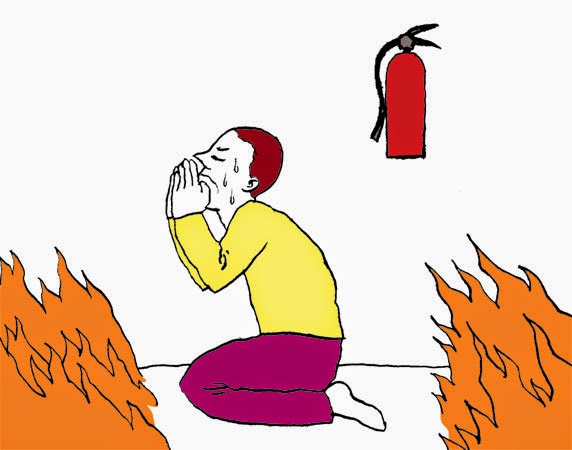
Even though you want to have connection with us, sometimes the idea of praying seems foreign and scary. Sometimes we feel ashamed and guilty because we don’t think we pray as much as we should. Our understanding of prayer remains limited and we remain stuck.
And sometimes, when we pray we are shallow, treating you like some kind of vending machine instead of being aware of your presence that already surrounds us. We are one-sided, asking always for mercy and compassion, but not pursuing the same in your world.
Forgive us. Give us another chance to appreciate the fullness of your love. Help us to shed our self-interest and find joy in serving your work of setting things right.
Thank you that you continually move within and around us. Give us eyes to see and eyes to hear.
Amen
Benediction: Take Time For God's Presence (based on Luke 5:16)

Monday, January 19, 2015
Come and See - Kayla McClurg in inward/outward

What did people see in Jesus? We tend to make him into a paper-thin replica of our ideas of “holy” rather than let him be the full range of human emotion and being.
I see a peacemaker, reconciler, voice for the voiceless, full of compassion and truth-telling. As well as provocateur, uprooter, sometimes a bit sarcastic and short-tempered. He is a loyal friend and trusted confidant, steady in times of trouble.
Even so, he tires of our whining, urges us to grow up and take responsibility for repairing our sorry messes. What kind of God did people “come and see” in Jesus? What can they expect to see in the likes of you or me?
But is there any resemblance at all? Do we leave some trail of evidence that grace shows up in plain human form?
Watch whom we seek out and whom we avoid. Attend the events we attend; go to our movies, read our magazines, see how we spend our money and time. Worry as much as we worry. Frequent the same web sites, read what we read, write the letters we write, make our phone calls. Help others as often as we help, show kindness to the extent we do, be as honest as we are honest. Allow the injustice we allow. Carry the burdens we carry. Offer up the prayers we pray.
Come and see who we are behind the scenes, what makes us cry, what makes us laugh. See if the rumors of our inspirited life are true.
The full article is available here
Subscribe to:
Posts (Atom)